What Still Sings
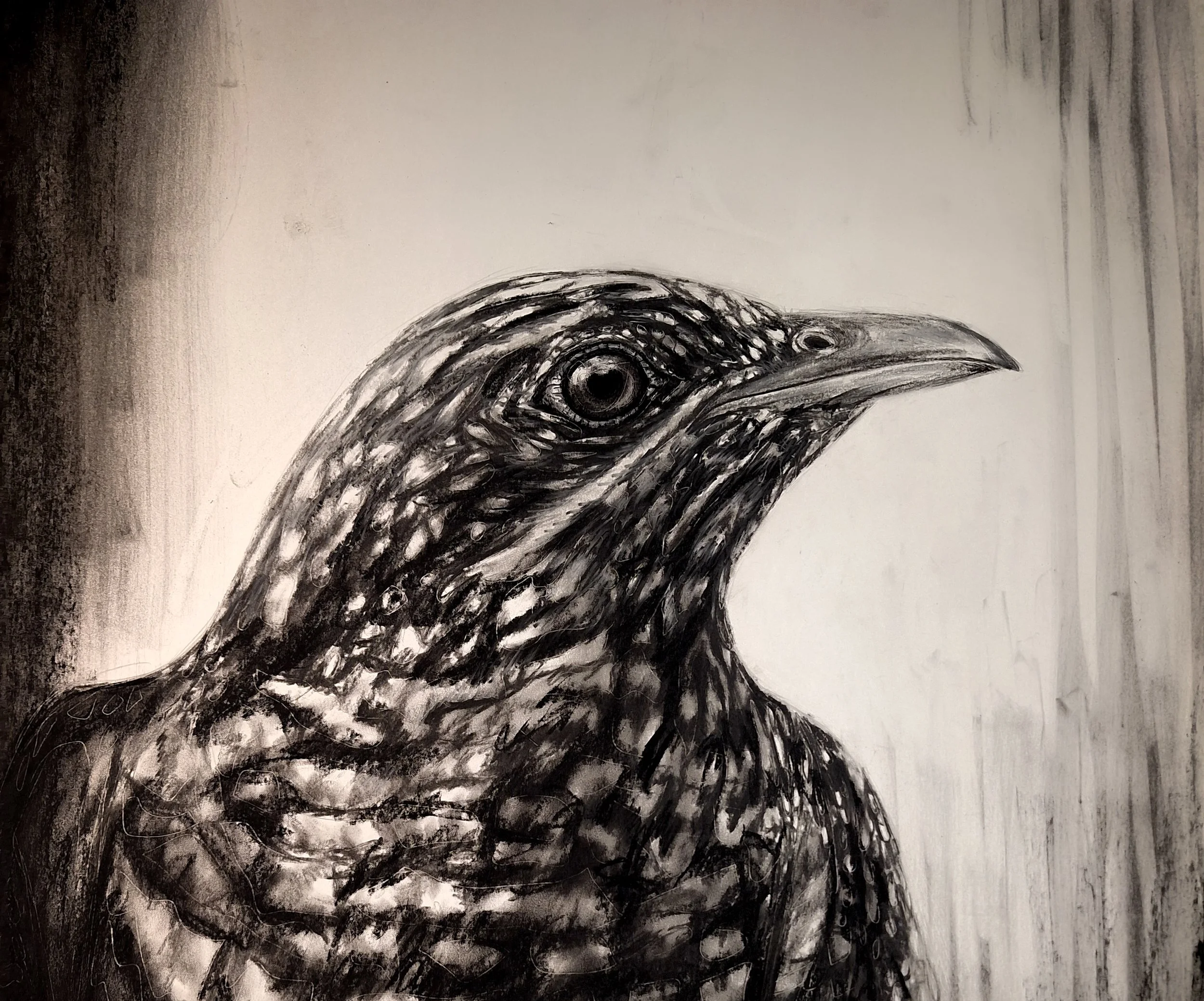
What Still Sings?
What Still Sings? is a long-term interdisciplinary art and research project following migratory species across the landscapes, waters, and human communities that sustain them. Through drawing, sound, original music, field recordings, storytelling, mapping, and live projection, the project explores migration not simply as movement from one place to another, but as a living network of relationships.
It asks what species carry between distant ecosystems, what their journeys reveal about environmental change, and how following an animal can transform our understanding of borders, belonging, memory, and place.
Following the Routes Between Places
The project grew out of years spent working as a park ranger, naturalist, artist, and conservation communicator in rural Alaska. While working within national parks and wildlife refuges, I became increasingly interested in the animals that refused to remain contained within the boundaries of a single protected landscape.
Birds I encountered on the tundra might spend part of the year in coastal Asia. Whales moving through northern waters would later appear along the coast of Mexico. Salmon connected the open ocean to inland forests, carrying marine nutrients into the bodies of bears, birds, plants, and countless smaller organisms. The more closely I observed wildlife, the more difficult it became to think of any species, or any place, as existing in isolation.
Migration revealed a different kind of map. It connected ecosystems separated by thousands of miles and exposed the limitations of the political borders through which humans tend to understand the world. An animal’s route might pass through multiple countries, protected areas, industrial zones, Indigenous territories, cities, oceans, and rapidly changing habitats. Its survival depends not upon one location, but upon the continued health of an entire chain of places.
Those patterns became the foundation of What Still Sings?
The project began with migratory birds traveling between Alaska and Asia. I was drawn to the scale and improbability of their journeys: small bodies crossing oceans, mountain ranges, storms, cities, and coastlines while relying upon inherited routes and increasingly fragmented habitats. Their migrations made distant landscapes feel inseparable. Alaska was not the end of their story, nor was Asia the beginning. Each location was part of the same continuous system.
From Alaska to Baja
My interest in migration eventually brought me from Alaska to Baja California Sur.
The whales I had known in northern waters followed the Pacific coast south toward the warmer waters, lagoons, and breeding grounds of Mexico. Following their migration changed the way I understood both places. Alaska and Baja were no longer separate chapters of my life. They were distant points along the same living route.
That realization expanded the project beyond birds.
In Baja, my work began engaging with whales, seabirds, mangroves, fish, marine mammals, and the coastal communities whose lives are intertwined with the sea. I became interested in how migration connects ocean health, tourism, development, regulation, fishing, conservation, and local livelihoods. An animal moving through these waters may become a scientific subject, a cultural presence, a source of income, a political argument, a tourist attraction, or a neighbor, sometimes all at once.
The migration of whales brought me to Baja geographically, but it also gave me a way of understanding my broader artistic practice. Following animals has repeatedly brought me into unfamiliar landscapes, where their movements become an invitation to listen, learn, and recognize connections I may not otherwise have seen.
Thailand and Birds Connecting Continents
The birds that first inspired What Still Sings? eventually brought the project to Thailand.
Many migratory birds connect the northern landscapes of Alaska with habitats across East and Southeast Asia. Their routes cross oceans and national boundaries while depending upon wetlands, forests, mudflats, islands, and coastal resting places throughout the Pacific. Thailand became another point along this shared ecological map, a place where I could continue tracing the relationships between migration, habitat, culture, sound, and memory.
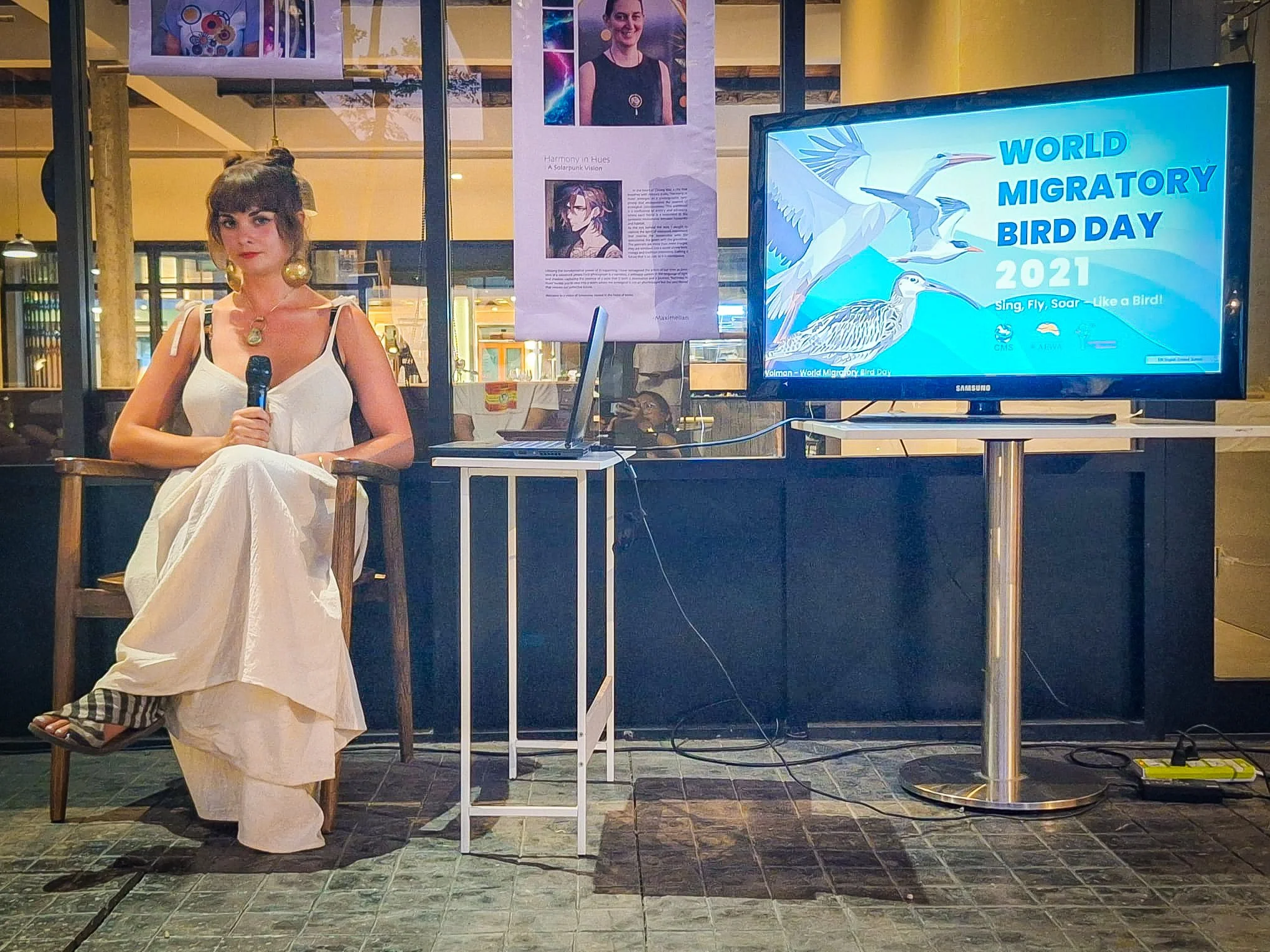
The project’s development in Thailand also deepened its relationship with music. I collaborated with songwriter and musician Emma Hill to create original songs that respond to the birds, stories, emotional landscapes, and ideas within the work. Her music does not function simply as a background to the visual art. It becomes another form of migration: a voice moving through a space, carrying memory and feeling between the drawings, the field recordings, the projected routes, and the people experiencing them.
The collaboration helped transform What Still Sings? from a collection of visual works into something more immersive and spatial. A visitor is not asked only to look at a bird or read about its route. They enter an environment shaped by image, sound, darkness, light, movement, distance, and the suggestion of landscapes beyond the room.
An Immersive Language of Drawing, Sound, and Light
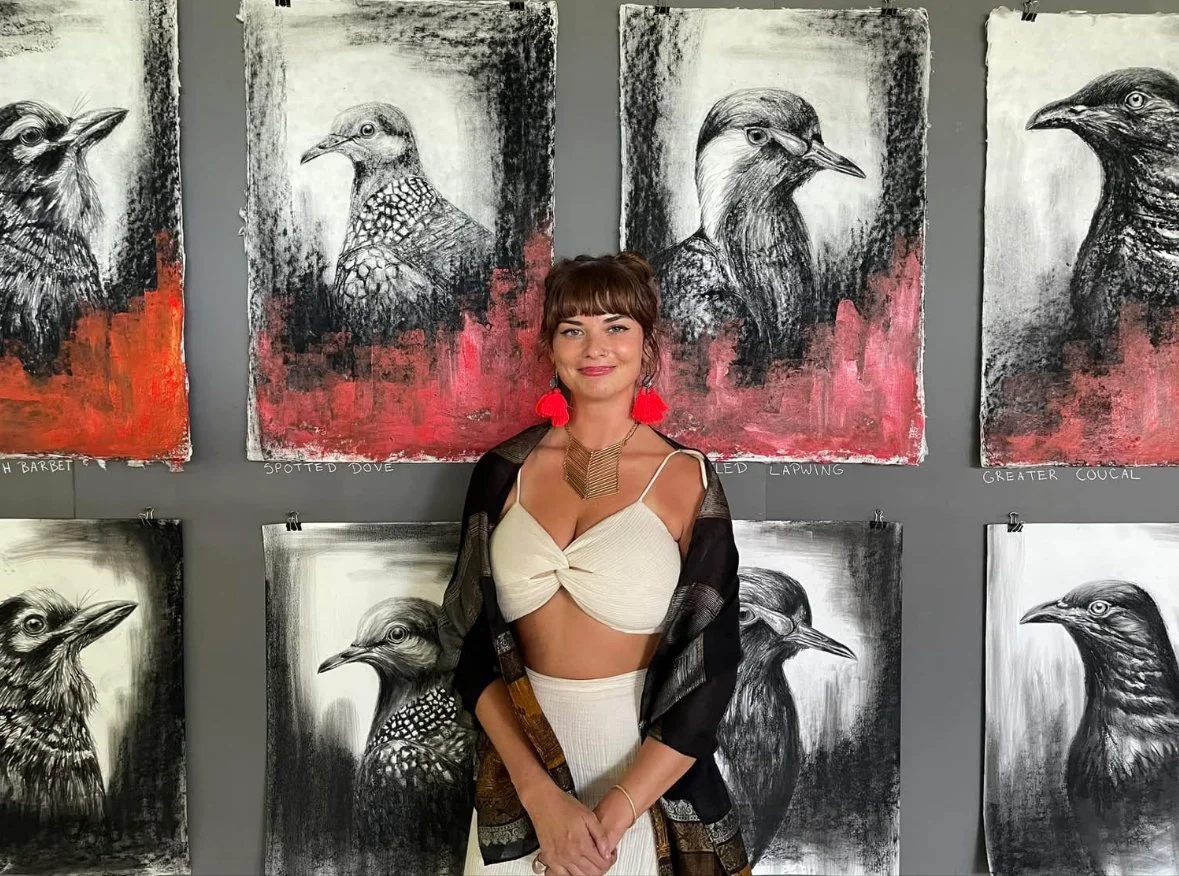
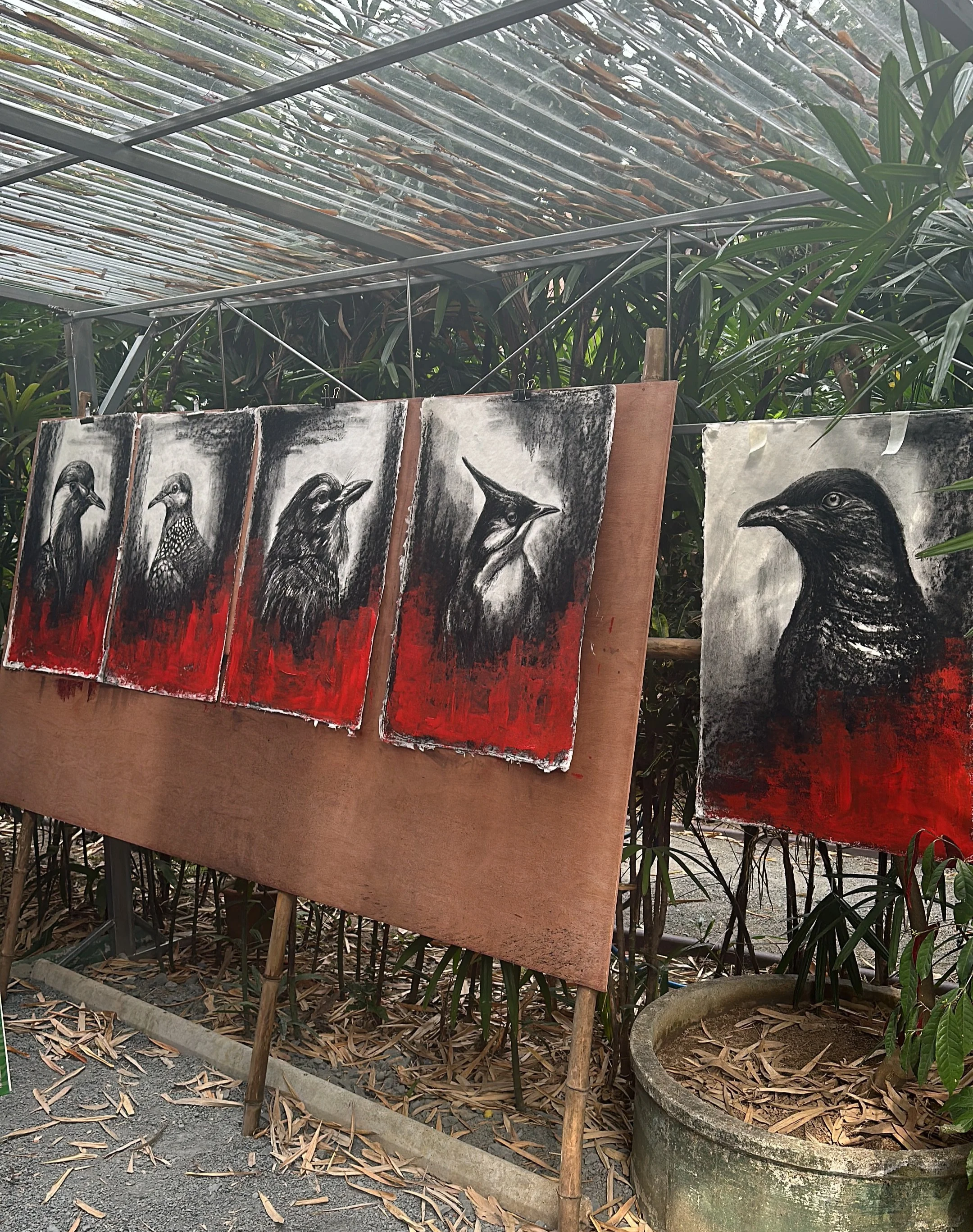
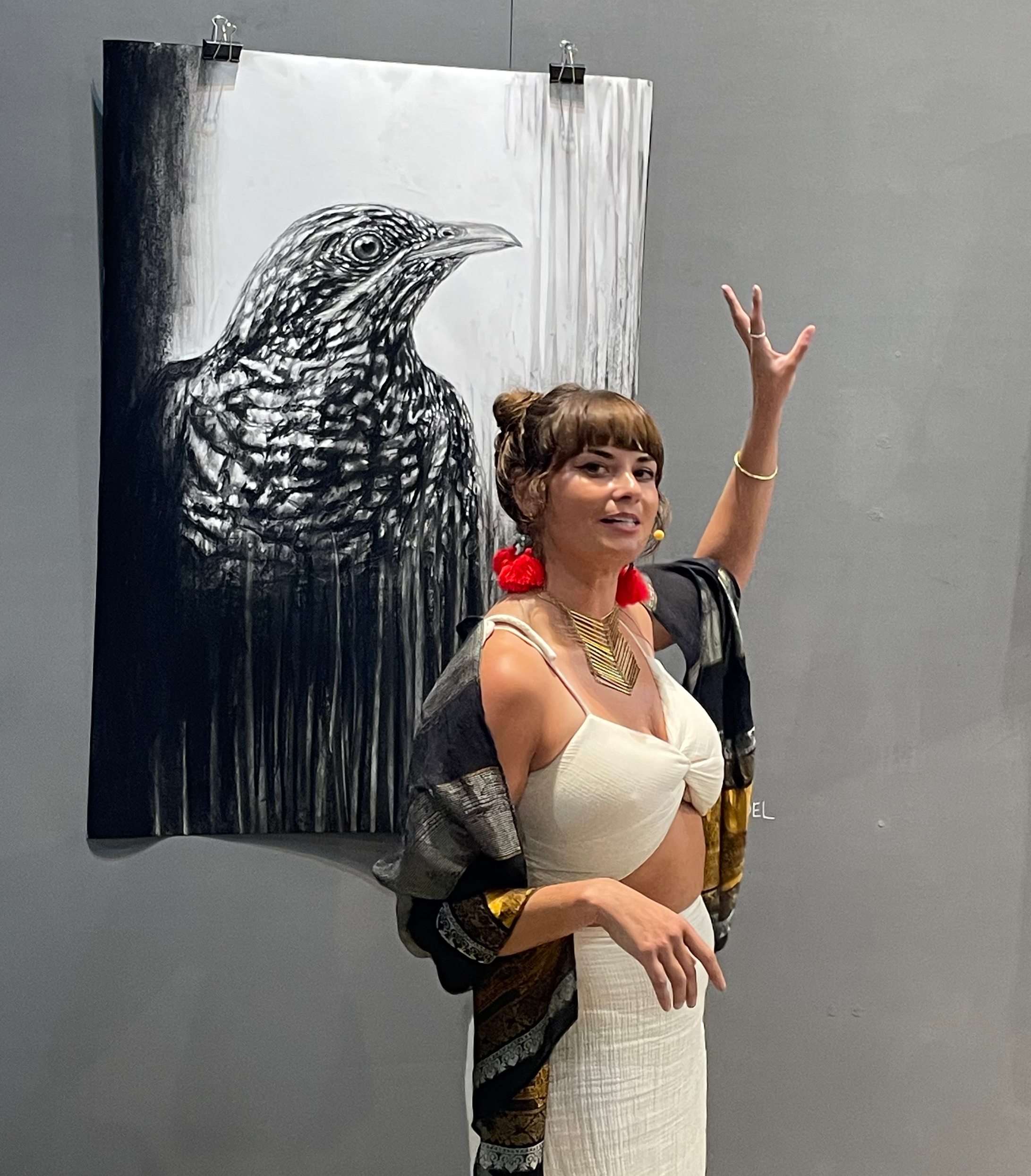
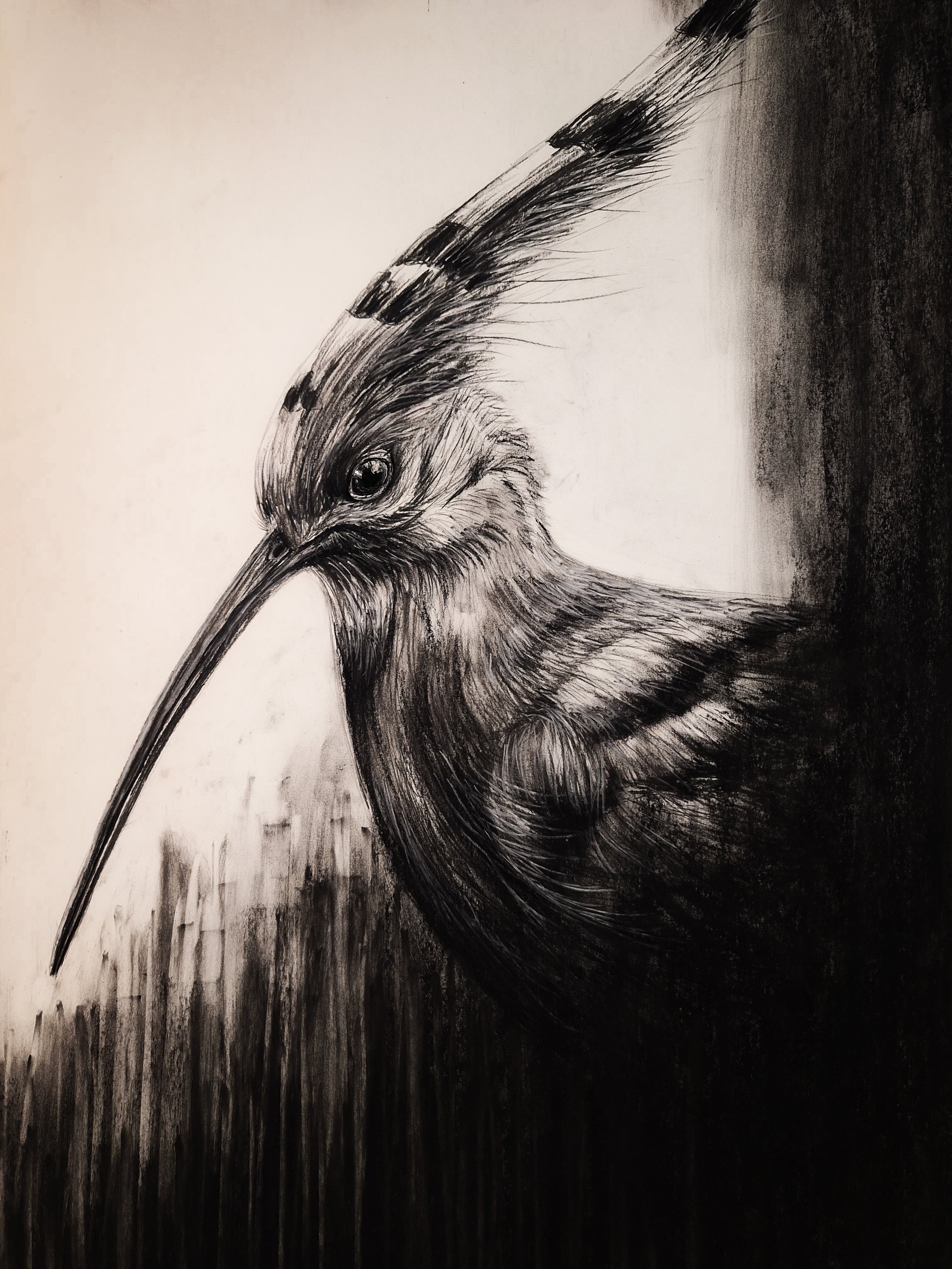
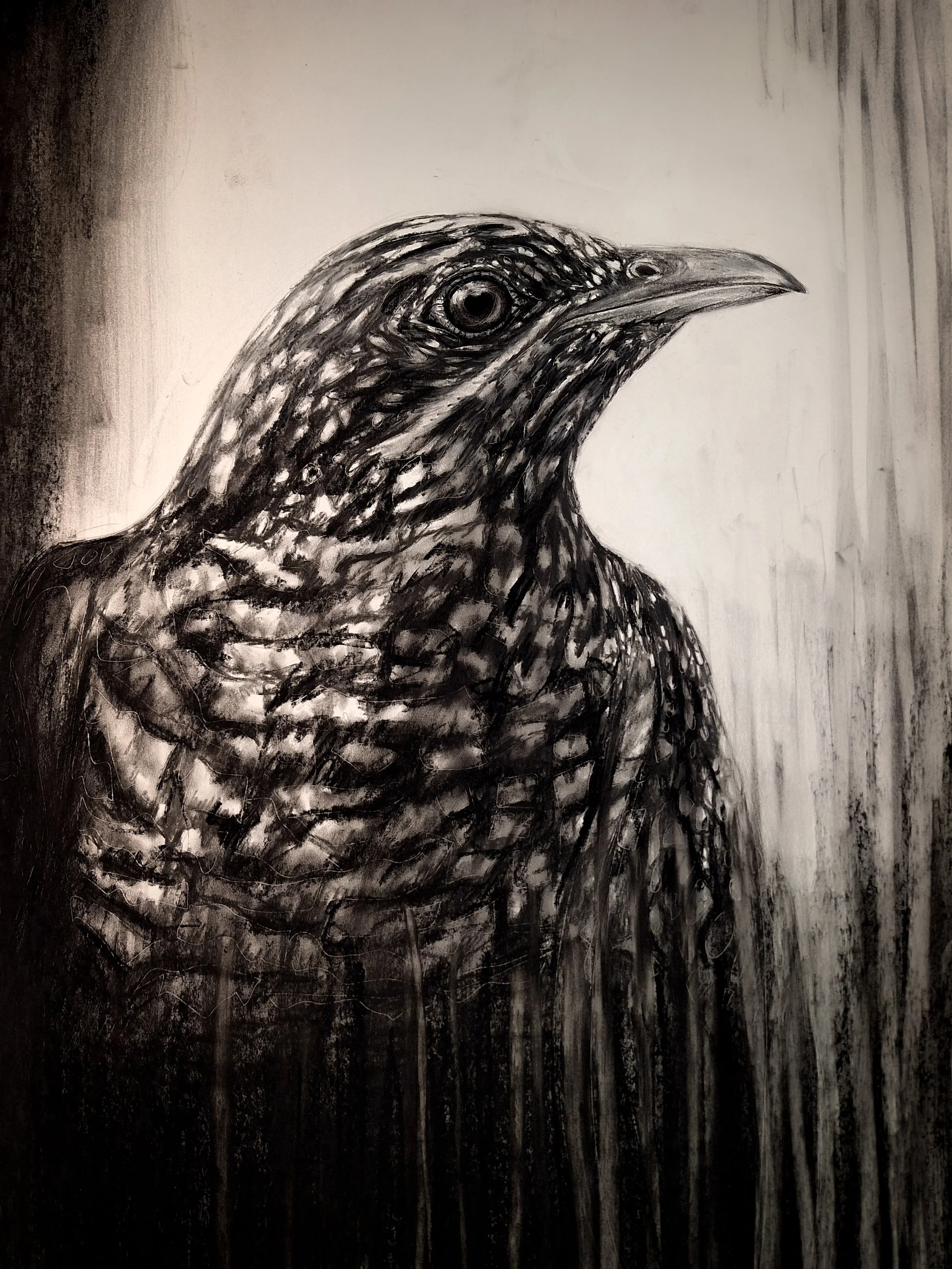
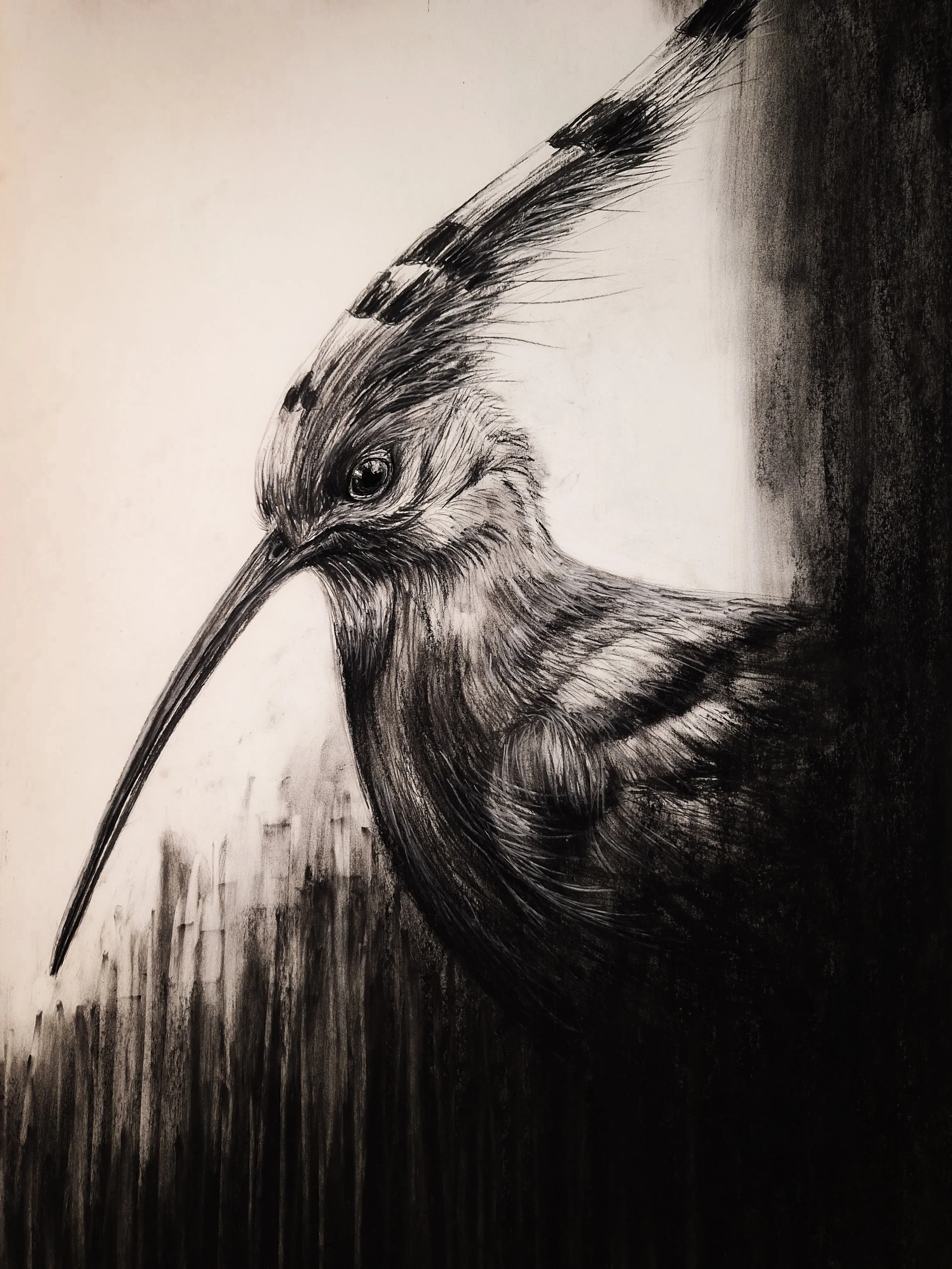
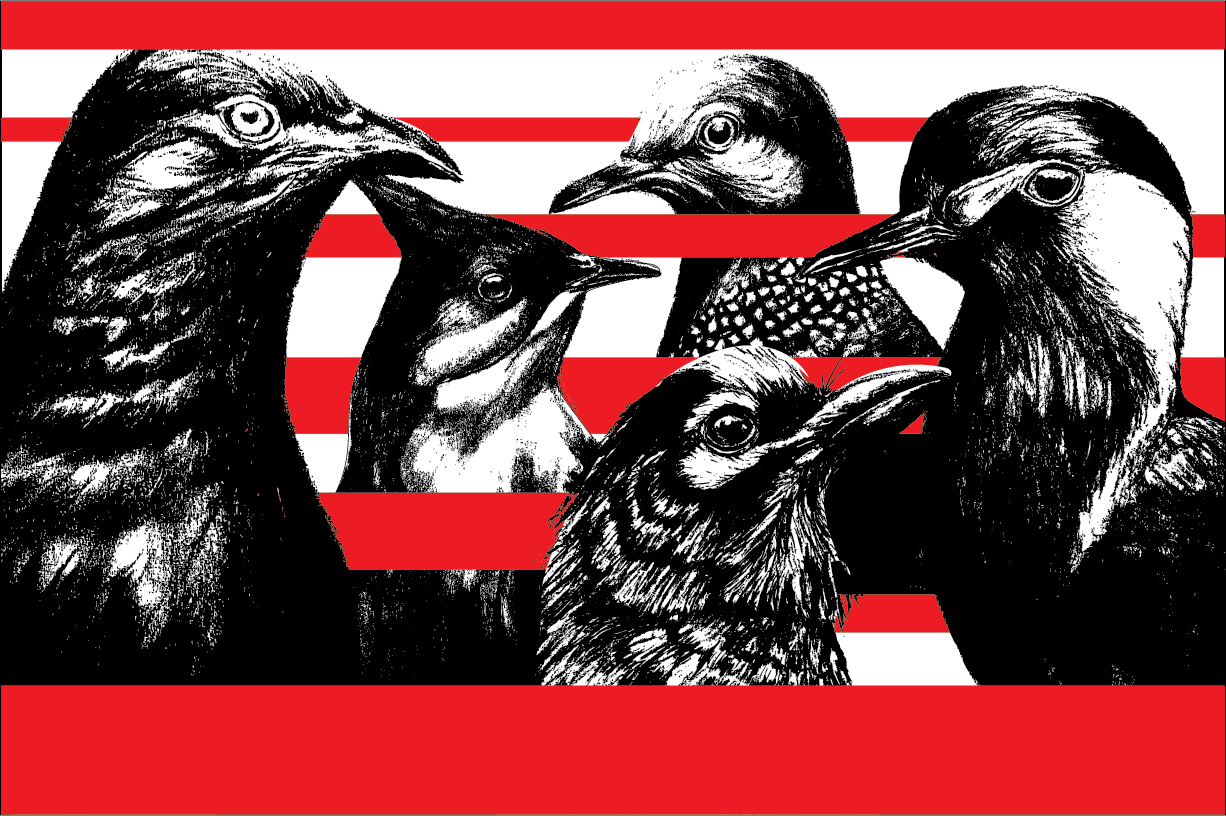
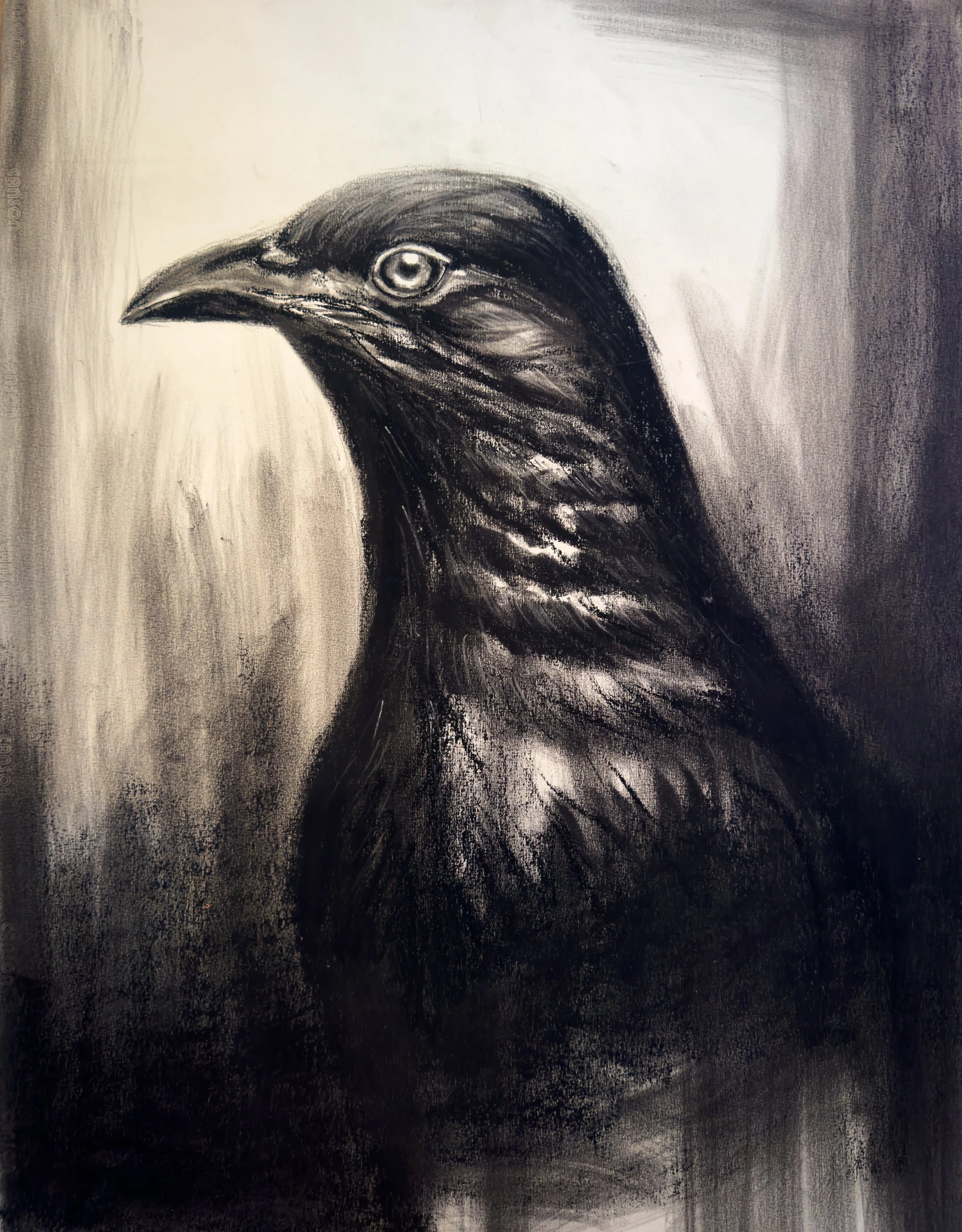
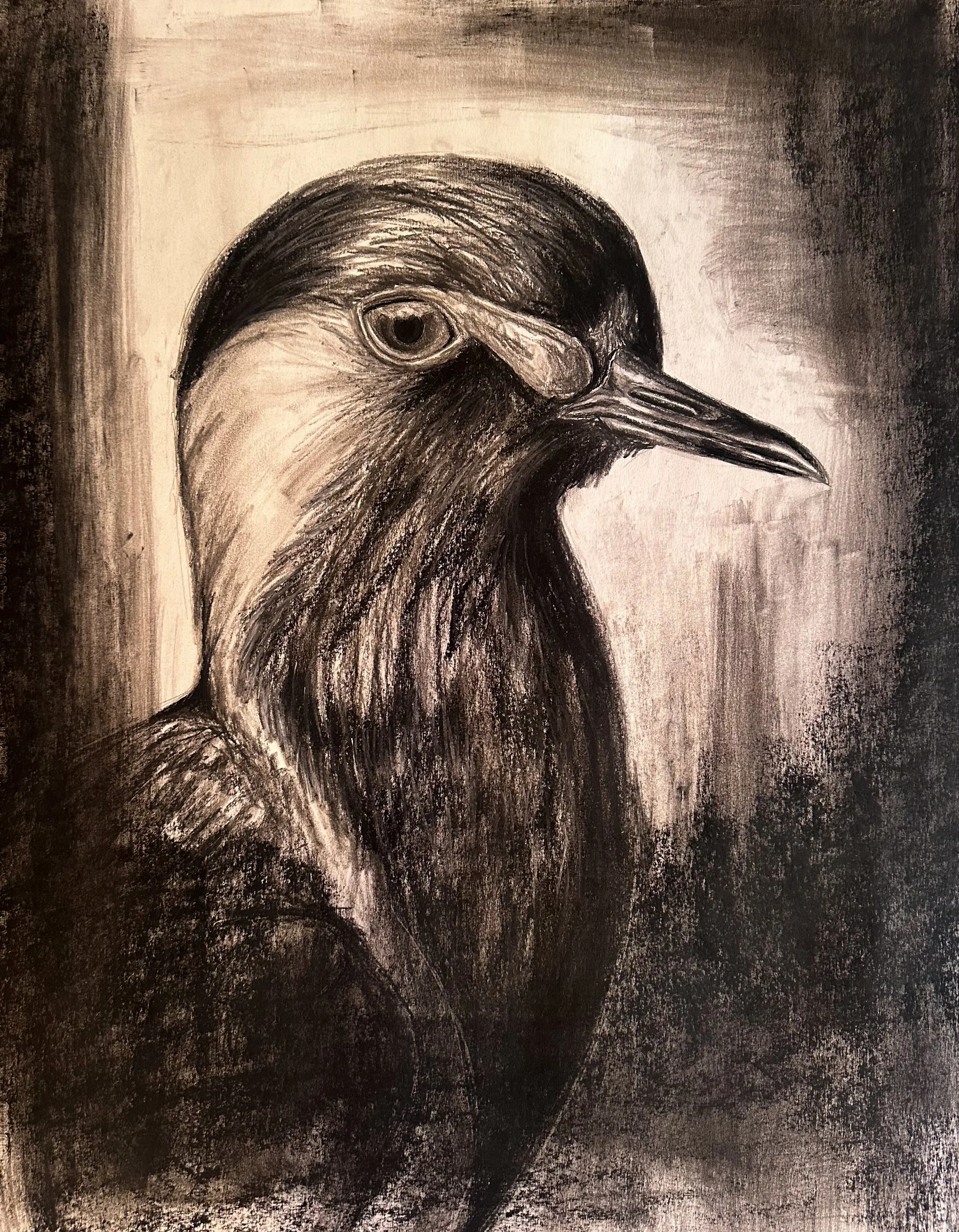
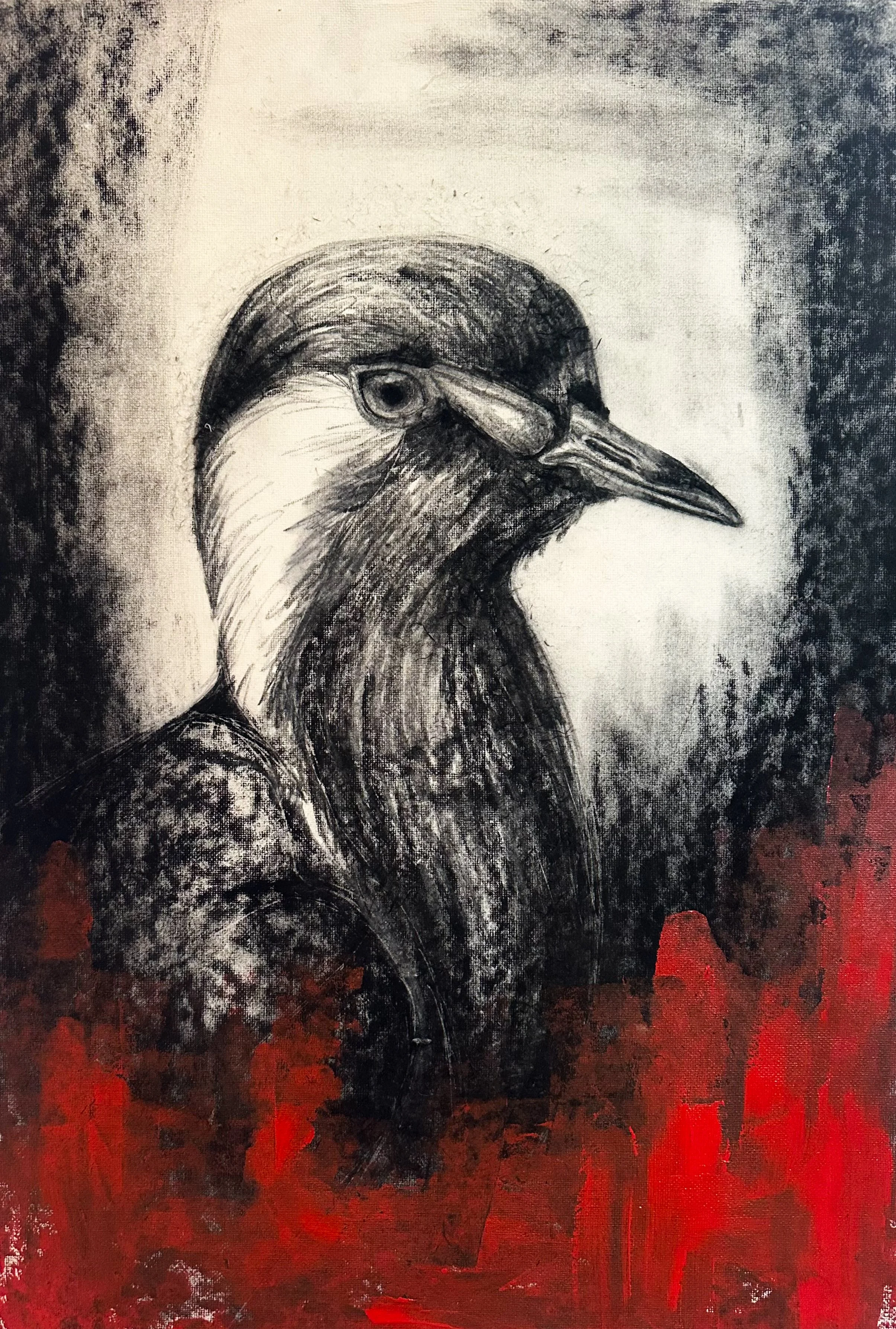
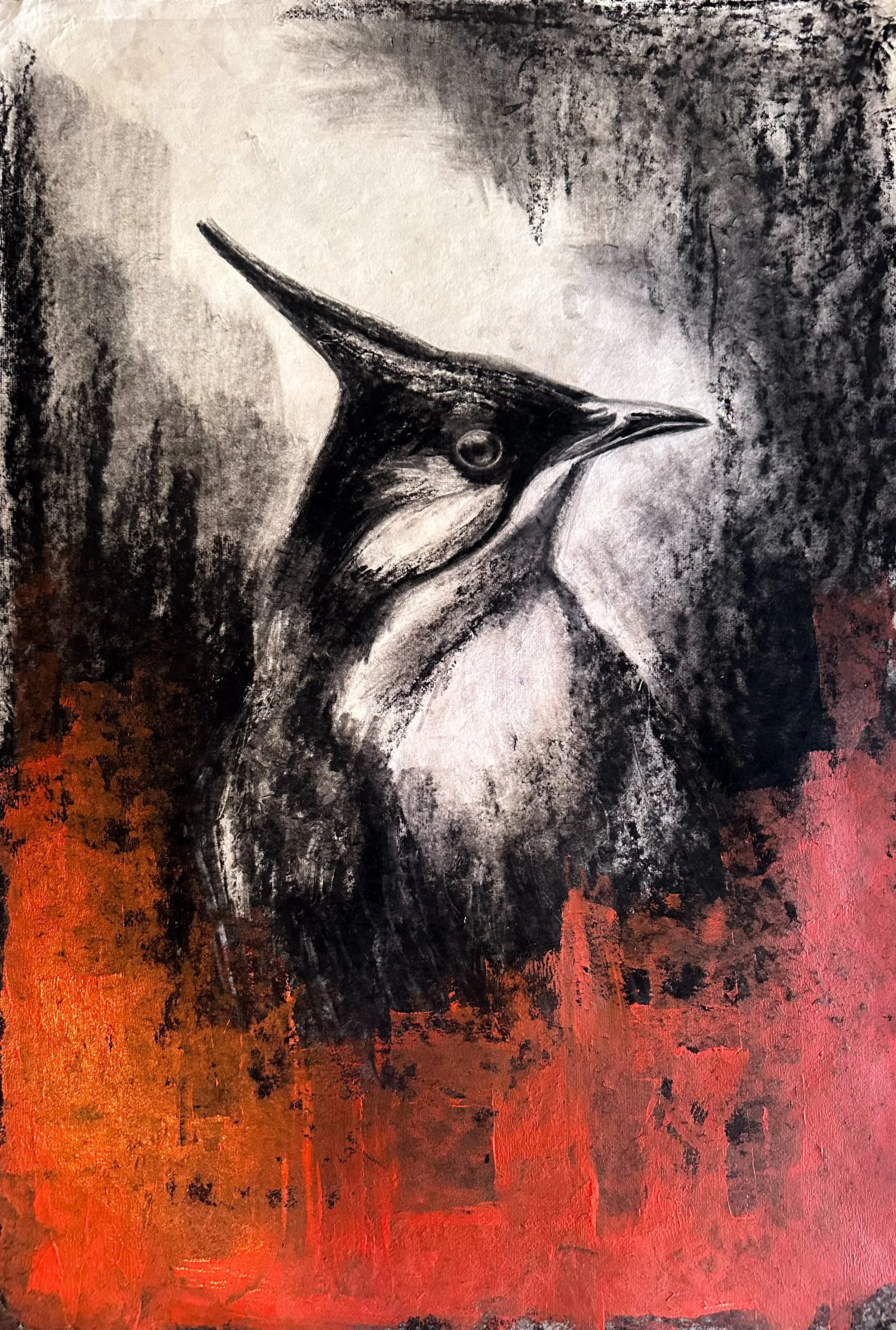
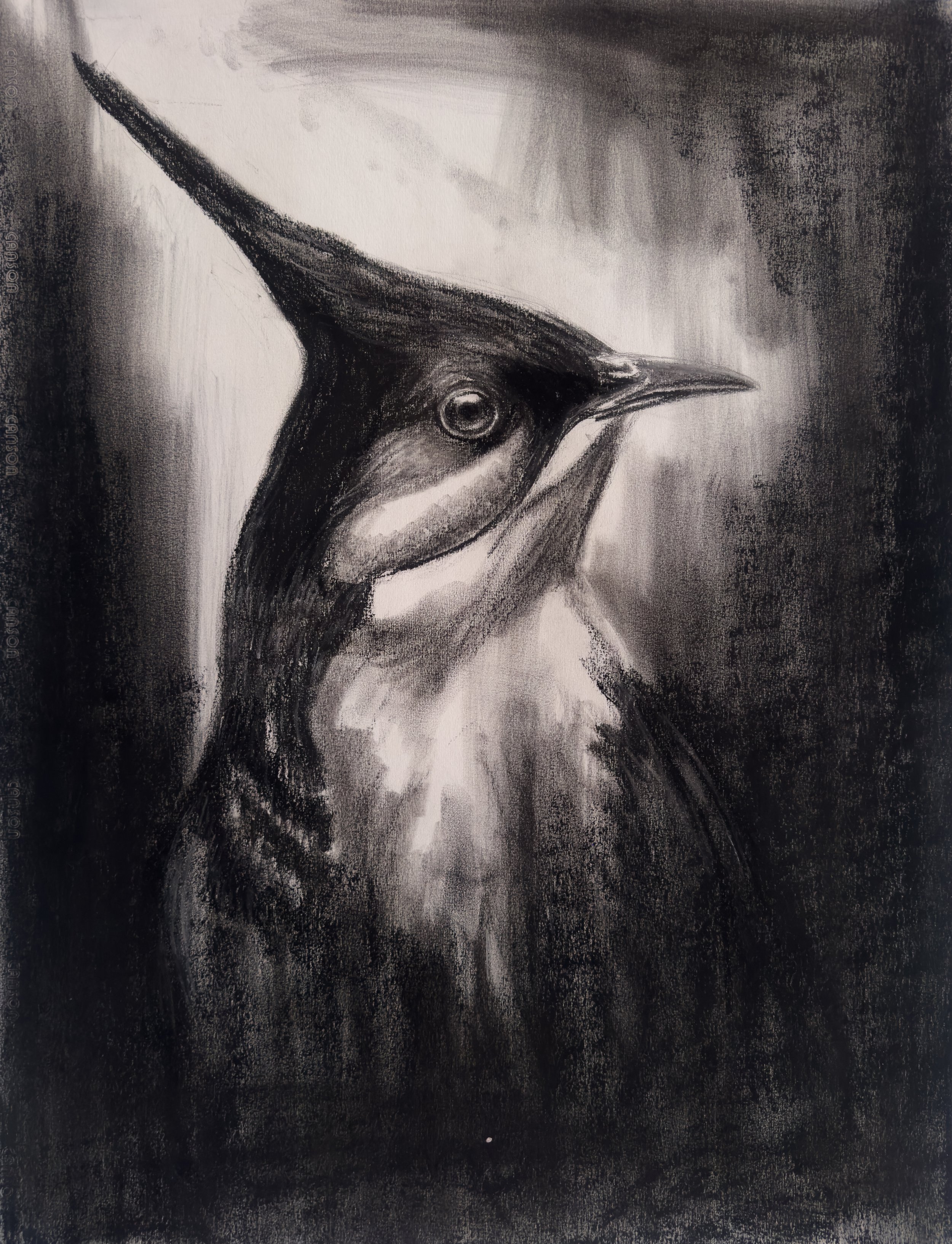
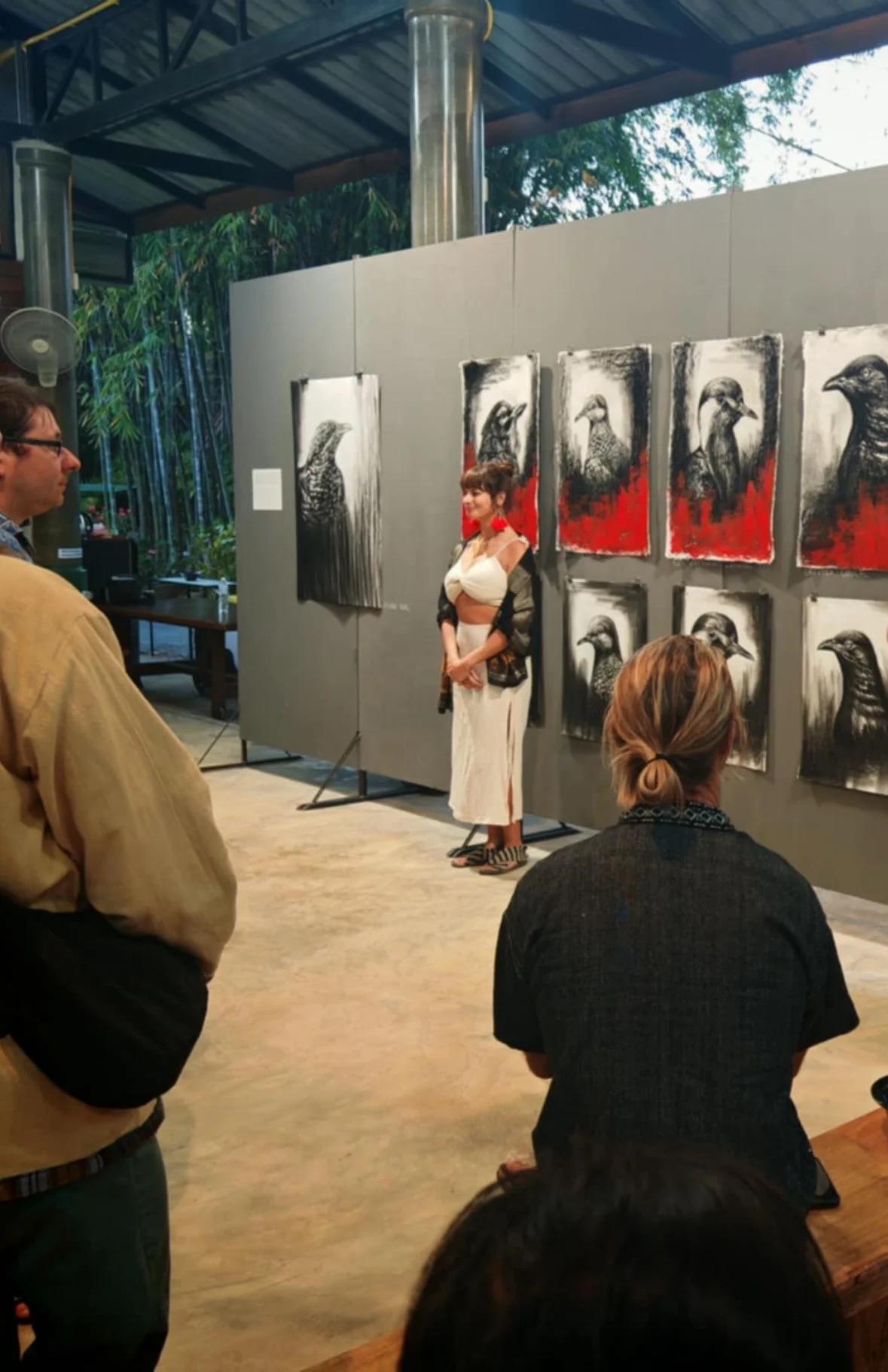
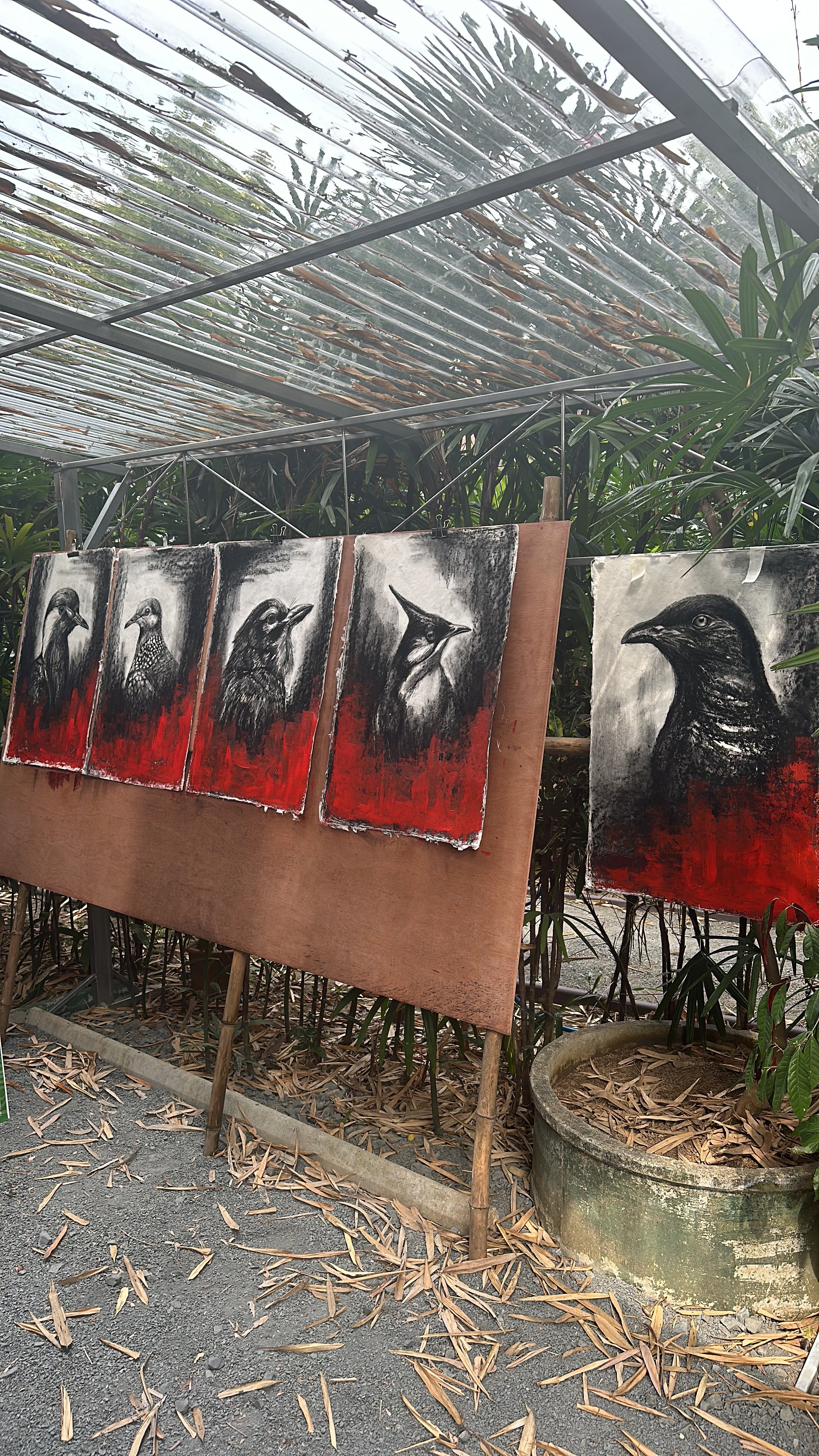
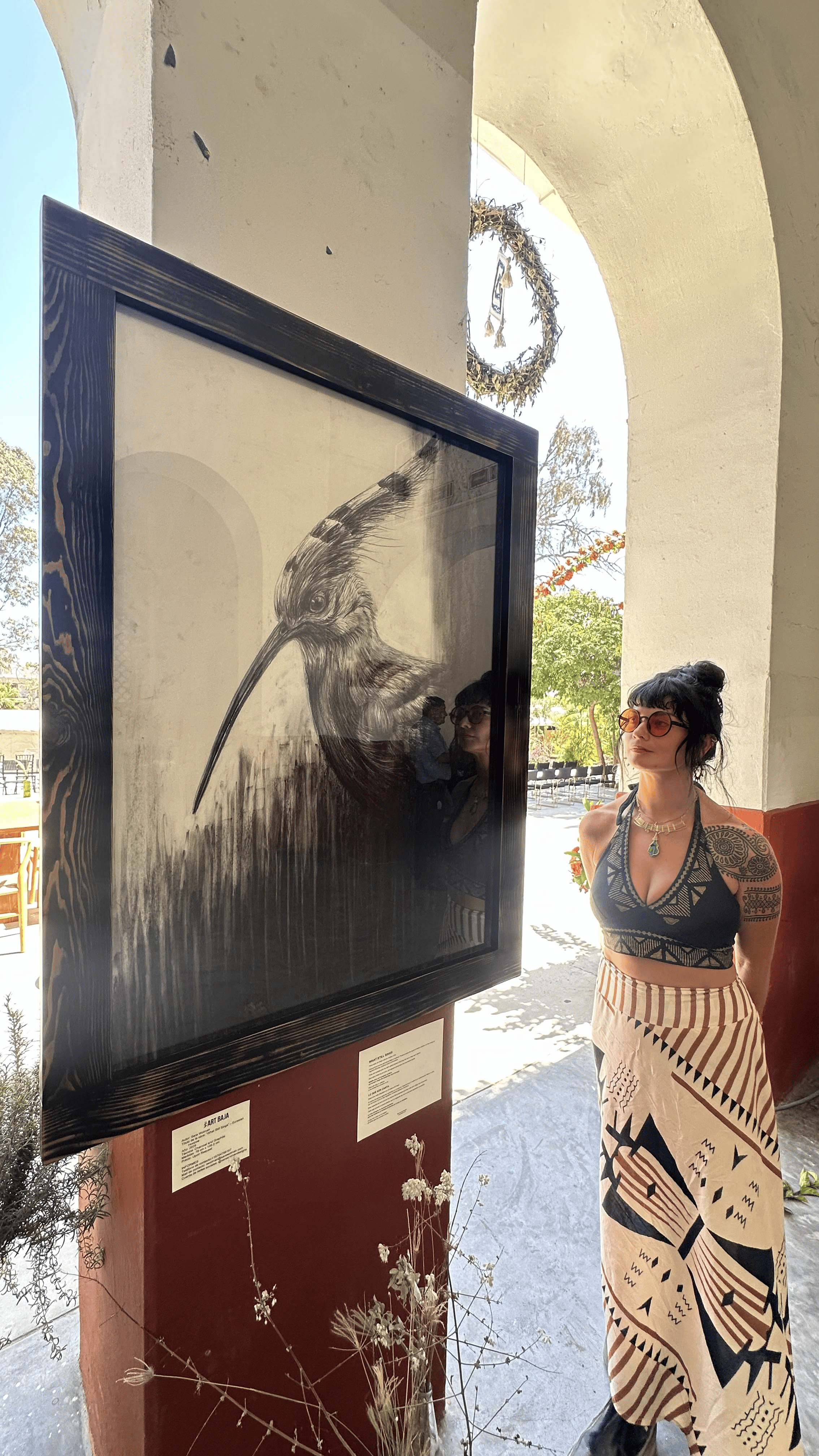
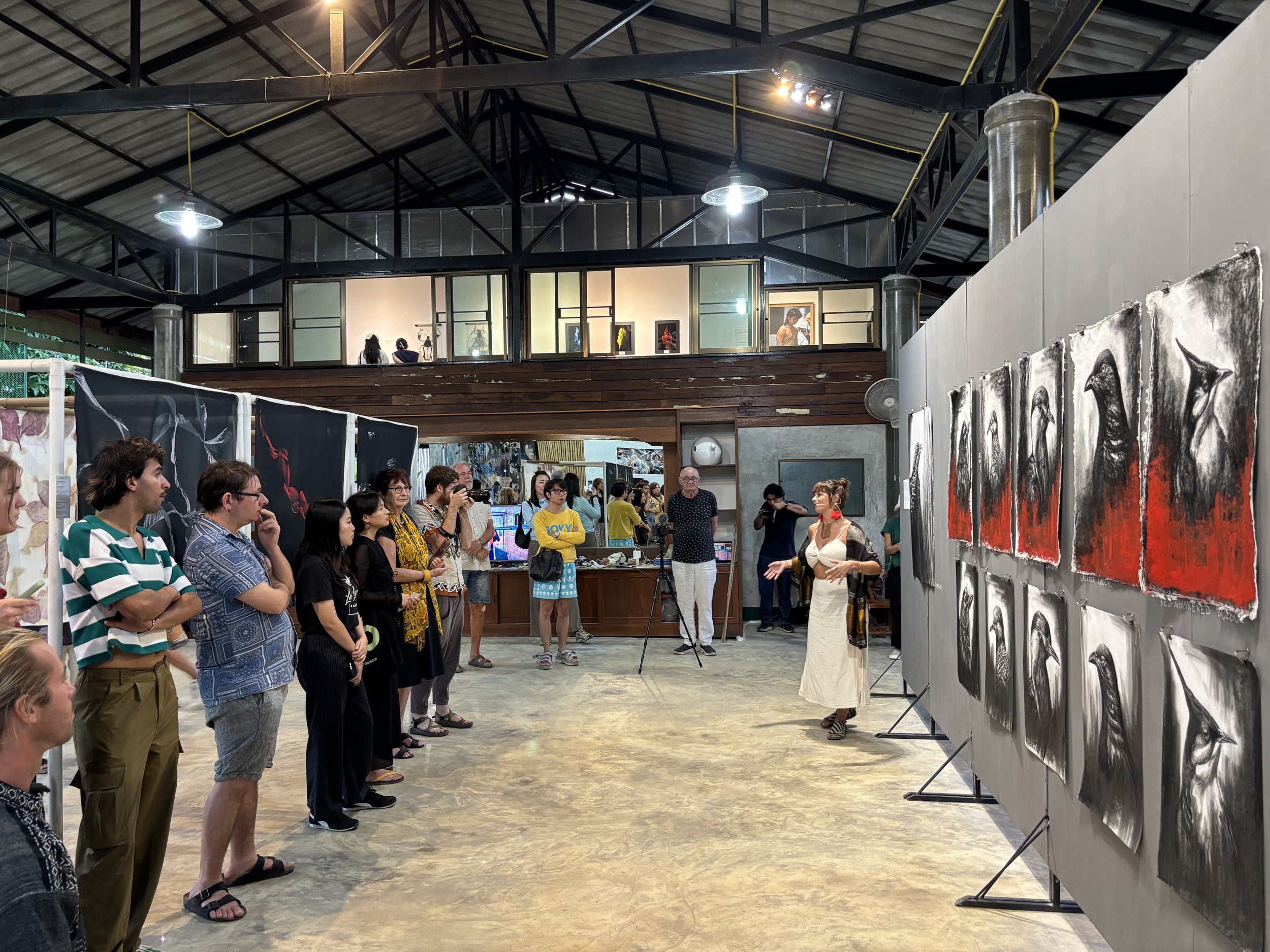
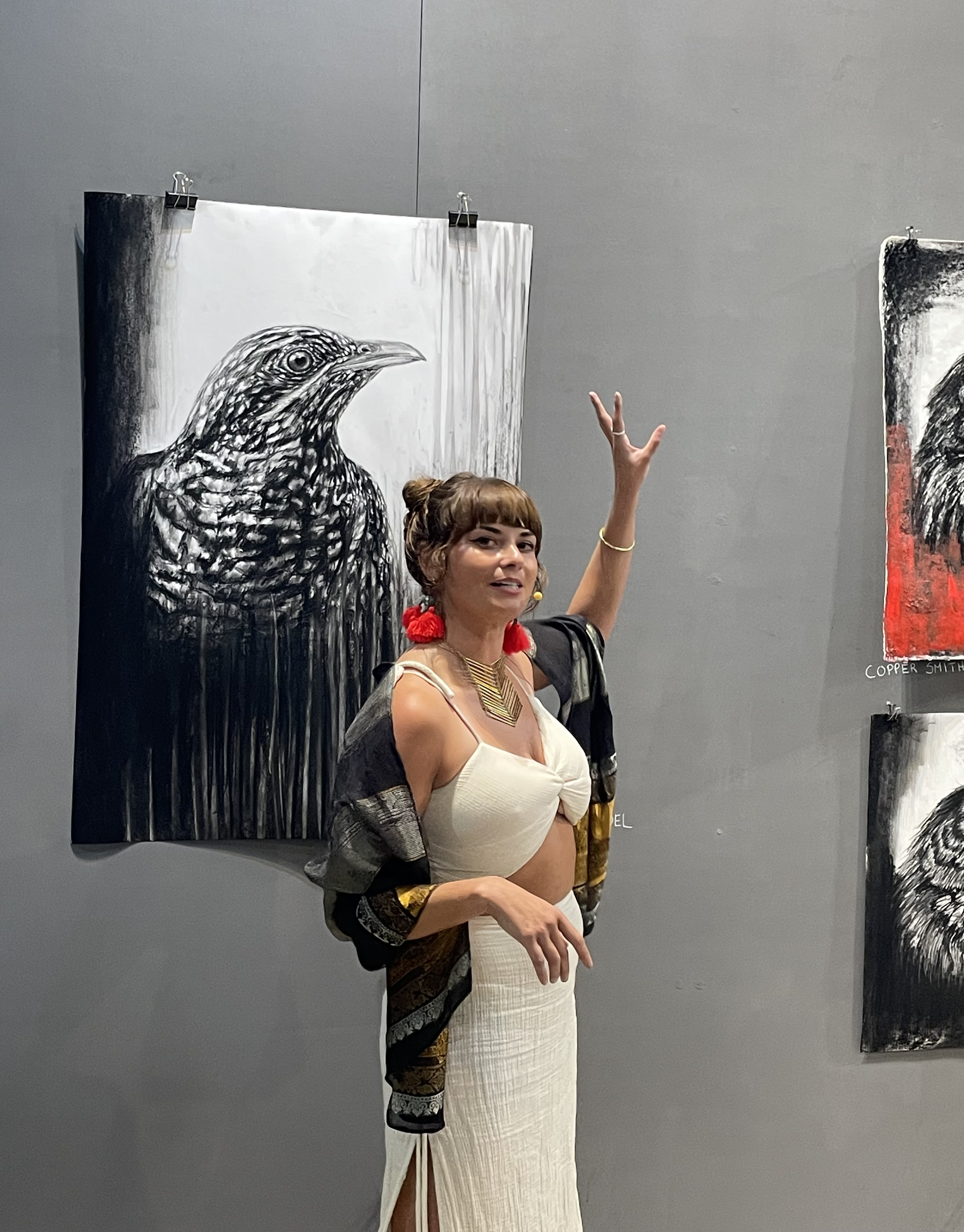
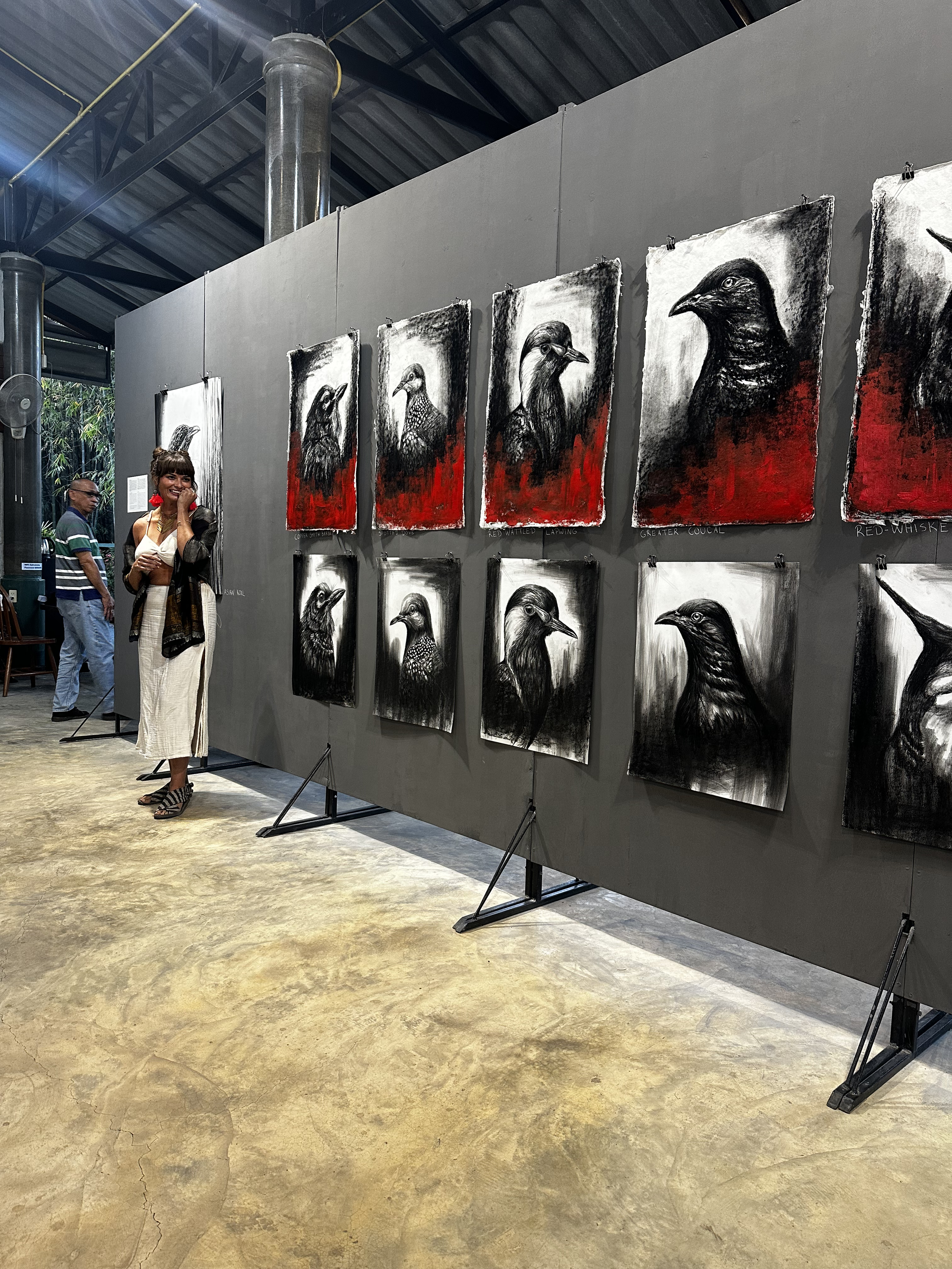
The visual heart of the project began with large-scale drawings of migratory birds. The drawings are intimate and highly observed, but they are not intended as isolated portraits. Each bird represents a larger network of habitats, seasons, threats, relationships, and journeys.
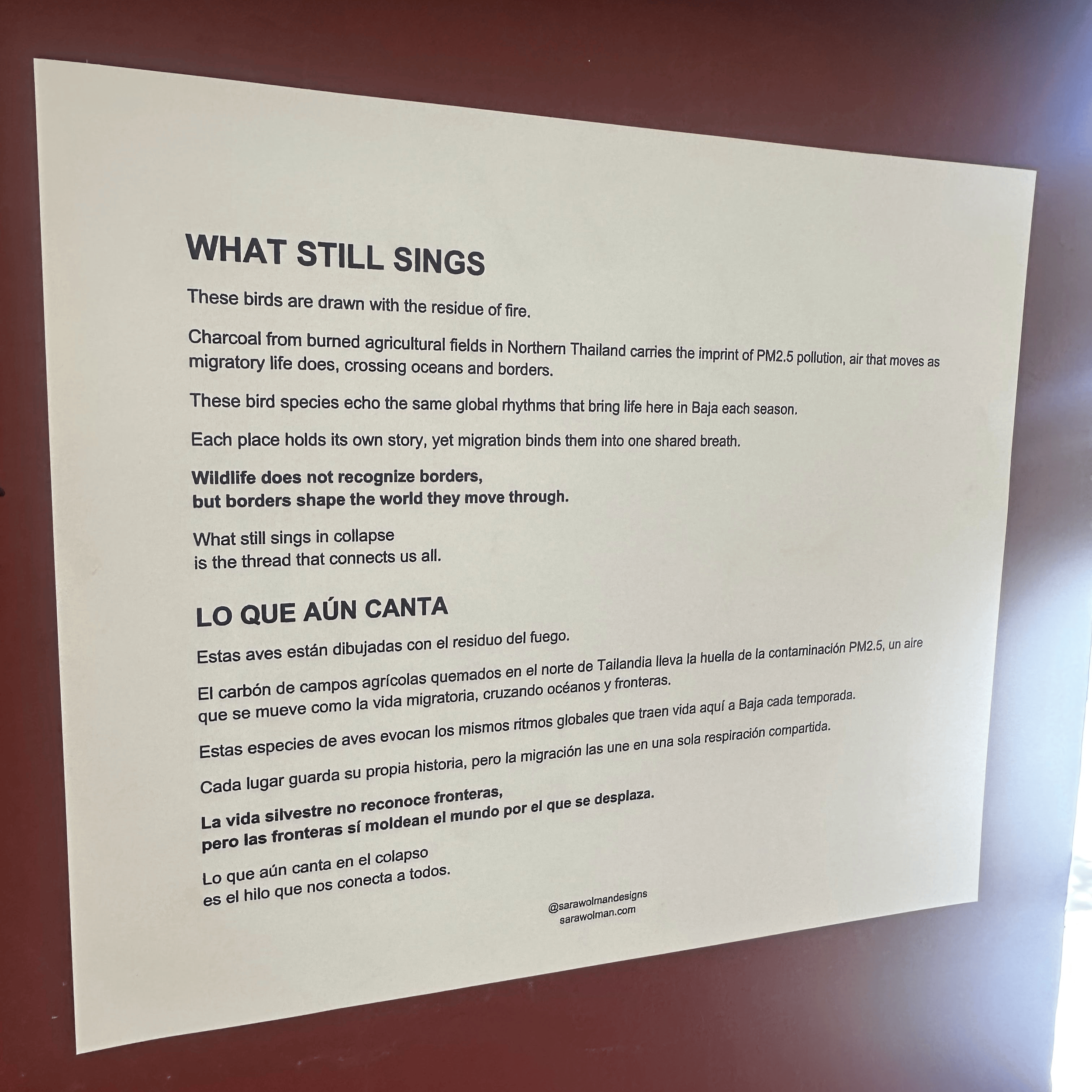
Charcoal and graphite carry their own ecological associations. They are materials connected to carbon, pressure, fire, and transformation. Their physical darkness holds weight and permanence, while the birds they depict are defined by movement.
Live laser projection introduces the opposite quality. Light is temporary, intangible, and constantly changing. Projected routes can cross the walls, drawings, bodies, and architecture of a space before disappearing. The laser becomes a way of drawing migration without fixing it permanently in place. It can trace a route, divide a room, connect distant images, or briefly illuminate a relationship that might otherwise remain invisible.
Field recordings and original music create another layer of place. Bird calls, water, wind, human voices, boats, insects, and other environmental sounds allow each chapter of the project to retain traces of the landscapes from which it emerged. Sound is particularly important to my practice because I am a visually impaired visual artist and often experience wildlife first through calls, movement, rhythm, silhouette, and proximity. Listening is not secondary to the way I understand an ecosystem. It is one of my primary ways of entering it.
Together, these forms create an experience that moves between scientific information and emotional recognition. Migration may be shown through maps and research, but it is also expressed through absence, repetition, uncertainty, scale, sound, and the feeling of moving through a space without seeing the entire route at once.
Chiang Mai Design Week
The next major iteration of What Still Sings? is being developed as an immersive experience for Chiang Mai Design Week.
The installation brings together large-format drawings, original works, sound, music, projected migration routes, and live laser mapping to create a visitor journey through the project. Rather than presenting art as a series of separate objects, the exhibition treats the entire space as a connected ecosystem.
Visitors will move among birds, voices, sounds, projected pathways, and changing light. Routes will extend across individual artworks and through the architecture itself, reflecting the way migration connects habitats that may appear separate when viewed from the ground. The installation is being designed to function at different scales while retaining a sense of intimacy, discovery, and movement.
Presenting the work in Chiang Mai is especially meaningful because Thailand is not simply a host location for an exhibition. It is part of the ecological story the project is telling. The birds represented within the work connect Thailand to Alaska and to many places between them. The exhibition therefore becomes both an artistic experience and a gathering point within the migratory routes that inspired it.
A Platform Rather Than a Single Exhibition
Although What Still Sings? began with a specific group of birds, it is becoming a broader platform for my long-term artistic practice.
Future chapters are developing through research in Mexico, Colombia, the Brazilian Amazon, Thailand, Alaska, and other regions connected by migratory flyways, coastlines, rivers, forests, and marine systems. Each place introduces different species, environmental pressures, cultural relationships, collaborators, and ways of understanding the living world.
The project may take the form of an immersive exhibition, a live projection, a collection of drawings, a sound work, a publication, a workshop, a scientific collaboration, or a public conversation. These are not separate projects using the same title. They are interconnected expressions of one continuing investigation.
A bird moving between Alaska and Thailand, a whale traveling from northern waters to Baja, or a river connecting the Amazonian forest to the Atlantic can each reveal something about how life persists through movement. Together, these chapters create a body of work about ecological connection at a planetary scale while remaining grounded in particular animals, places, and human relationships.
A Philosophy of Attention
At its core, What Still Sings? is a practice of attention.
I do not enter a place believing that a short period of research will allow me to fully understand or represent it. My work is shaped by scientific literature, field observation, conversations, local and Indigenous knowledge, collaboration, and the willingness to remain uncertain. I am interested in developing non-extractive approaches to artistic research: listening before interpreting, acknowledging local names and histories, building relationships over time, and resisting the pressure to turn every encounter into immediate content.
The project also considers how we relate emotionally to other species. I am interested in connection without reducing animals to simplified versions of ourselves. Wildlife can inspire empathy, humor, grief, and recognition while still possessing lives, senses, motivations, and relationships that exceed our understanding.
Art cannot replace conservation policy, scientific research, habitat protection, or community-led action. It can, however, change the emotional conditions through which people encounter those things. It can make a migratory route feel less like a diagram and more like a fragile passage upon which a life depends. It can transform an unfamiliar species into a presence. It can help someone understand that the loss of one wetland, forest, coastline, or river may reverberate across an entire hemisphere.
The title What Still Sings? is both a question and a form of recognition. It asks what remains audible amid ecological loss, what continues moving despite damaged habitats, and what forms of life, memory, knowledge, and relationship persist.
It is not only a project about what we are losing.
It is also about what remains alive, what continues to move, and what may still be protected.
We are not separate from the song.
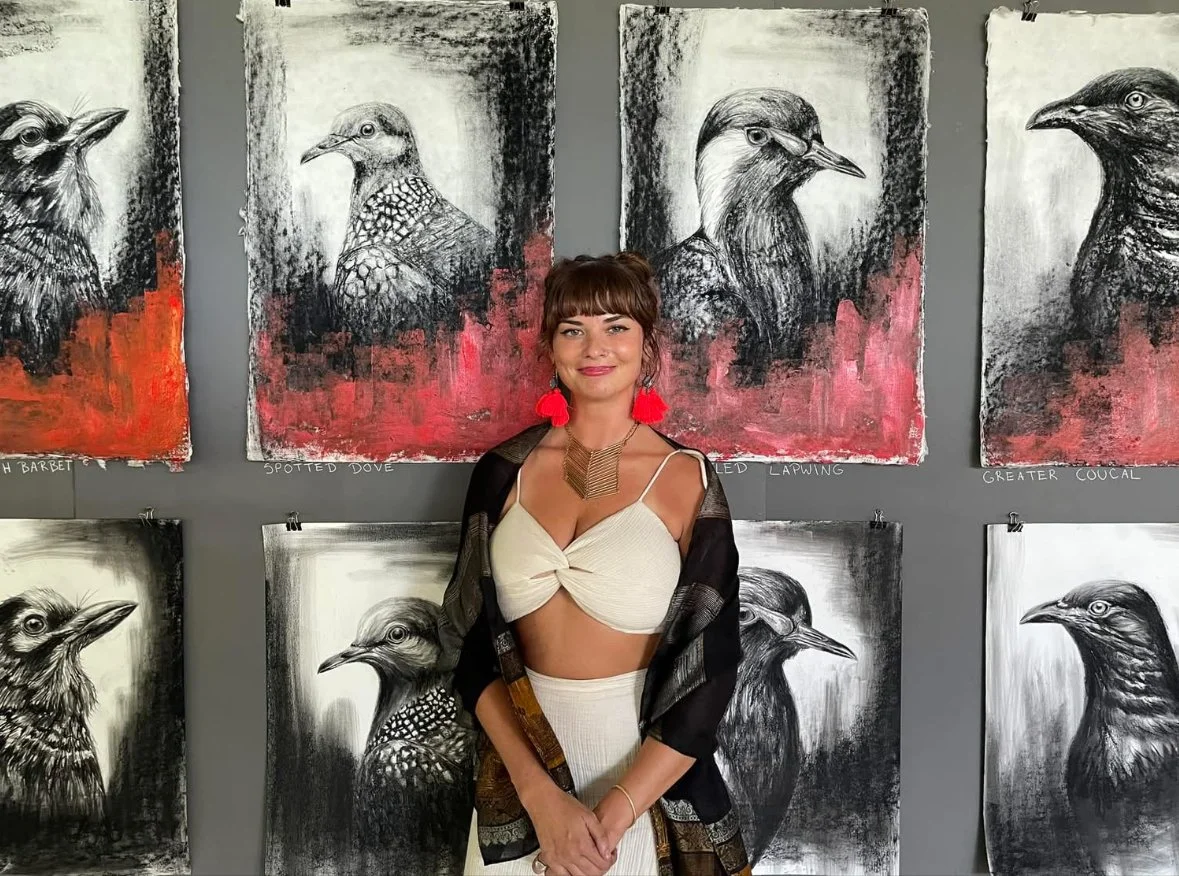
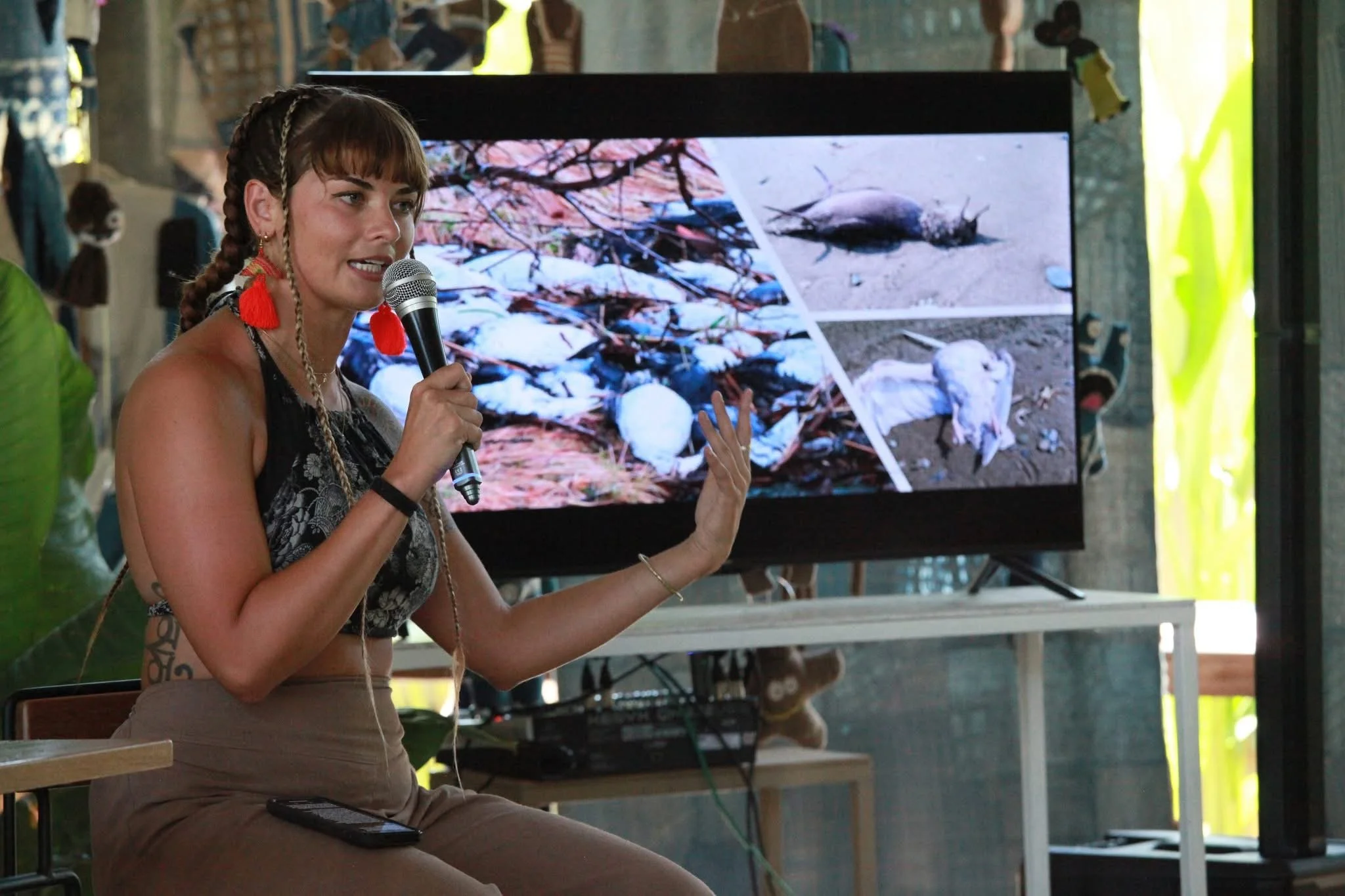

My studio in Thailand at Studio 88